
AC Repair in St. George, UT: Why Summer Breakdowns Happen Here — and What to Do First
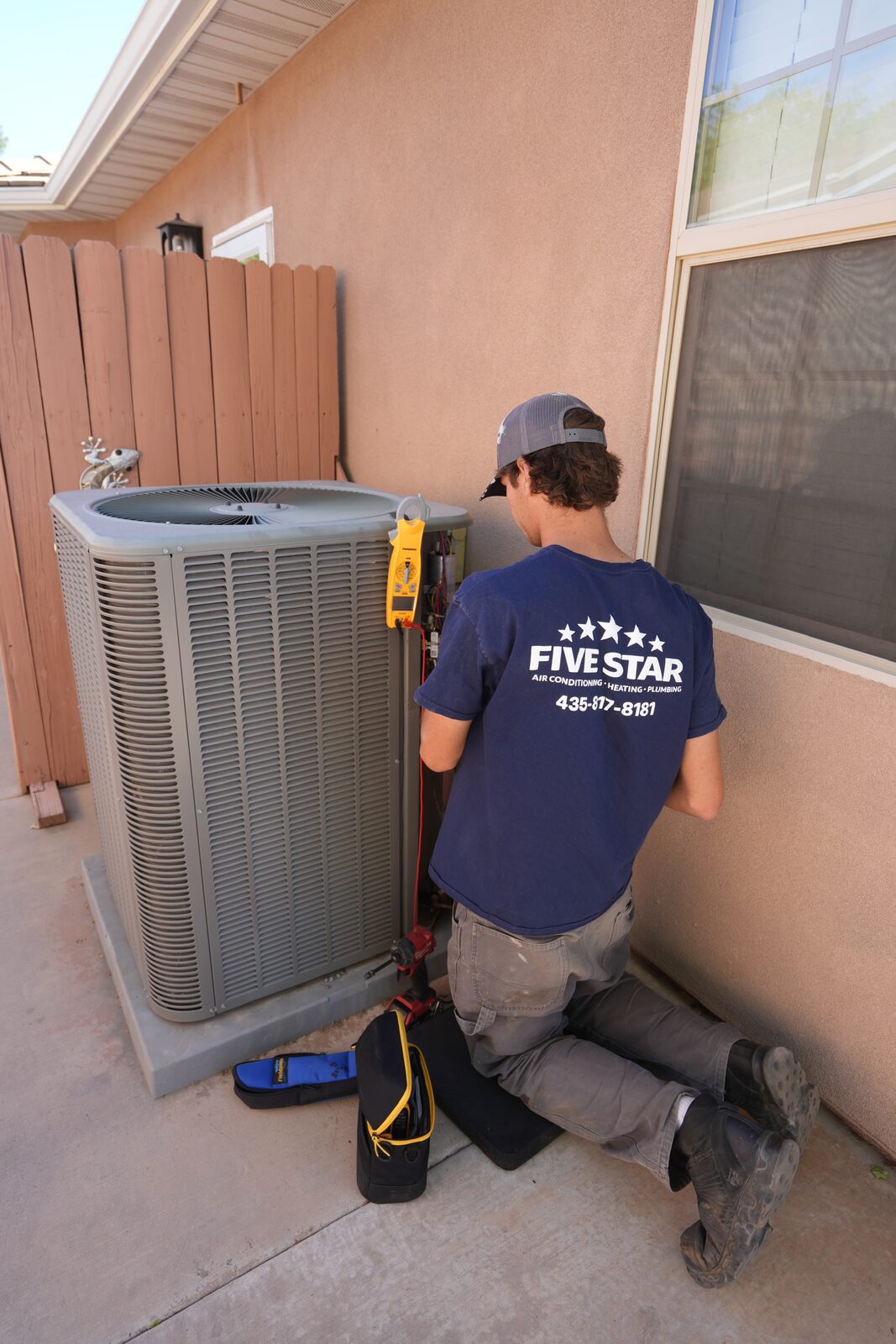
Every June in St. George plays out the same way. The first real heat wave rolls in, daytime highs jump past 105°, and air conditioners that limped through May suddenly can’t keep up. By the afternoon, the phone is ringing with the same sentence over and over: “It was fine yesterday.”
If that’s you right now, this guide is meant to actually help — not just push you to call. We’ll walk through why AC systems fail specifically in Southern Utah, what you can safely check in five minutes before you spend a dollar, and how to tell the difference between a quick fix and a real repair.
We’re Five Star Air Conditioning, Heating & Plumbing, a local owner-operated shop based right here in St. George. If you’d rather just talk to a person, call us at 435-817-8181. Otherwise, read on.
Why air conditioners break down in St. George when they don’t elsewhere
Southern Utah is genuinely hard on cooling equipment. A unit that might cruise for 15 years in a mild climate gets pushed much harder here, for three reasons most homeowners never think about.
The heat load is brutal and relentless
When it’s 108° outside and you want 74° inside, your system is fighting a 34-degree gap for hours on end with no overnight relief. Components that are “good enough” in a moderate climate — a marginal capacitor, a slightly low refrigerant charge, an aging compressor — get exposed fast under that kind of sustained demand. This is why so many failures cluster around the first 105°+ stretch of the year. The weak parts were always weak; the heat just found them.
Dust and red sand choke airflow
Anyone who’s lived here through a windy spring knows how fine the dust is. It packs into air filters far faster than the “change every 90 days” sticker assumes, and it coats the outdoor condenser coil and the fins on your unit. A clogged filter or a dirty condenser forces the system to work harder for less cooling, which raises your power bill and shortens the life of the equipment. A surprising number of “my AC is broken” calls in St. George are really “my AC is suffocating.”
Hard water takes its toll on the whole home system
Washington County water is hard, and while that’s more obviously a plumbing issue, mineral buildup affects anything that moves water — including high-efficiency systems with condensate drains that can clog and trip a safety switch, shutting the whole unit down.
None of this is meant to scare you. The point is that regular attention matters more here than the manufacturer’s generic schedule suggests, and that a lot of summer breakdowns are preventable.
Check these five things before you call anyone
Before you schedule a service call, run through this list. Sometimes the fix takes five minutes and costs nothing, and we’d rather you know that than pay for a trip we didn’t need to make.
- Check the thermostat. Make sure it’s set to Cool, the target temperature is a few degrees below the current room temperature, and the batteries aren’t dead. This solves more “broken” AC calls than you’d believe.
- Look at your air filter. In St. George dust, a filter can clog in a matter of weeks during summer. A badly clogged filter restricts airflow enough to make the system struggle — or freeze into a block of ice. If it’s gray and packed, swap it and give the system an hour.
- Clear the outdoor unit. Walk out to your condenser and clear away leaves, grass clippings, and the red sand and dirt that collect against it. It needs open airflow on all sides to dump heat. Gently hose off the fins if they’re caked.
- Check your breaker. Cooling systems pull a lot of power, and a tripped breaker is common. If it’s tripped, reset it once. If it trips again immediately, stop — that’s an electrical issue for a pro, not something to keep resetting.
- Look for ice or water. If you see ice on the refrigerant lines or the indoor unit, turn the system off and let it thaw fully before running it again. Pooling water near the indoor unit can mean a clogged condensate drain.
If you’ve done all five and your home still won’t cool, it’s time to bring in a technician.
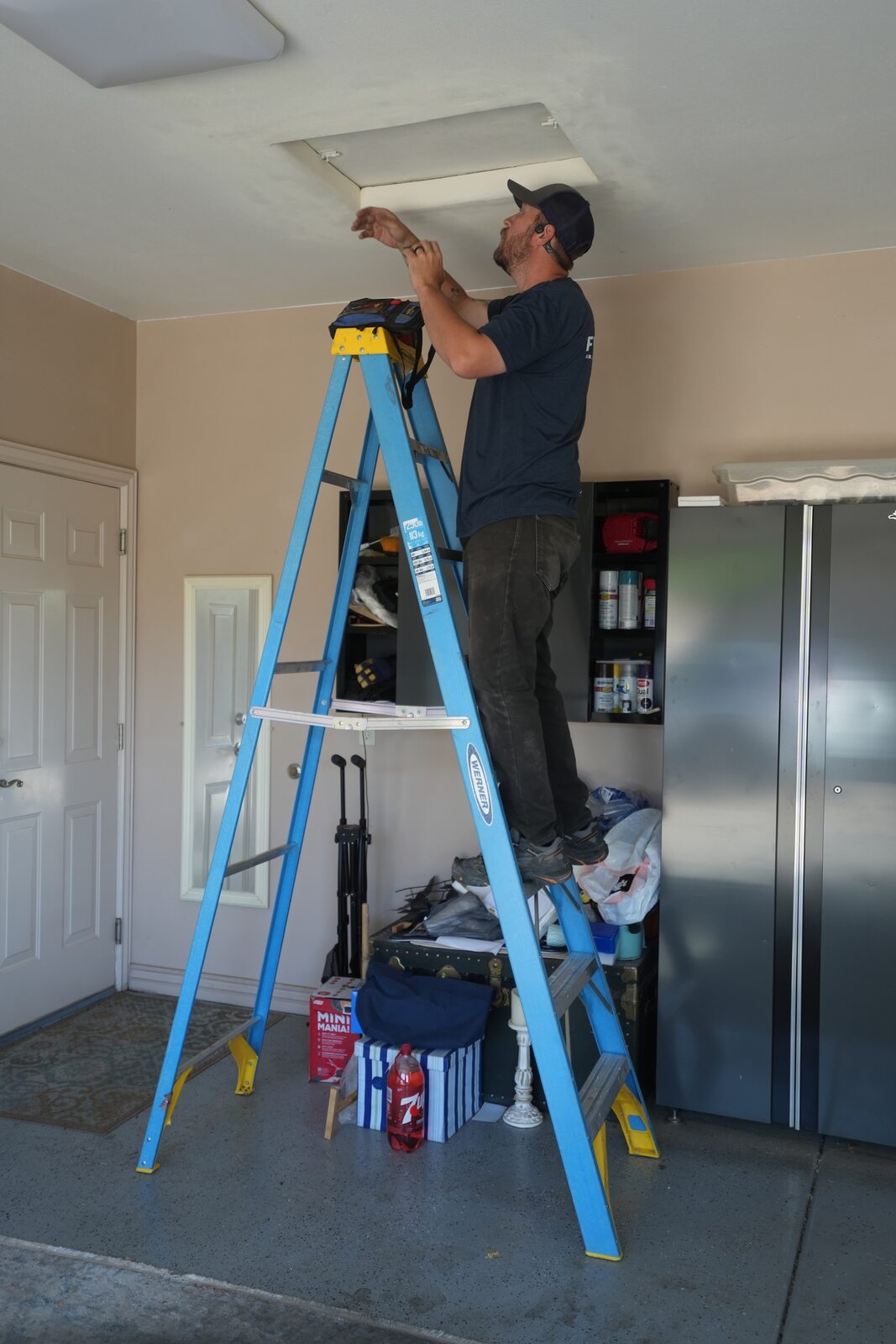
A failed fan motor being pulled during a repair — one of the more common summer call-outs.
When it’s a real repair (and what’s usually behind it)
Once the easy stuff is ruled out, the common culprits in our area are:
- A failed capacitor. One of the most frequent summer failures — a small, inexpensive part that takes the brunt of heat stress. Symptom: the outdoor fan won’t start, or you hear a humming click.
- Low refrigerant from a leak. If your system was cooling fine and slowly got weaker, a leak is a likely cause. Refrigerant doesn’t get “used up” — if it’s low, it’s leaking, and just topping it off without finding the leak is throwing money away.
- A frozen coil from airflow problems. Often traces back to that dirty filter or a low charge.
- Compressor or motor issues. The bigger-ticket items, more common on aging systems pushed hard by our heat.
A good technician’s job here is to diagnose honestly — to tell you when it’s a $200 capacitor versus when you’re looking at a conversation about replacement. You should never feel pressured, and you should always get a clear explanation of what’s wrong before any work happens.
Why homeowners in St. George call Five Star
We’re a local, owner-operated company — not a national chain running a call center. When you call 435-817-8181, you’re reaching a St. George shop that knows this climate, these homes, and these systems. We install and service every major brand (Bryant, Daikin, Lennox, Goodman, Carrier and more), so our recommendation is never about pushing one manufacturer.
What you can count on: a straight diagnosis, an upfront explanation before we touch anything, and honest guidance on repair-versus-replace when an older system is on the edge.
AC not keeping up with the heat?
Don’t wait for a hot afternoon to turn into a miserable night.
Call 435-817-8181