
Heat Pump vs. Gas Furnace in Southern Utah: An Honest Comparison
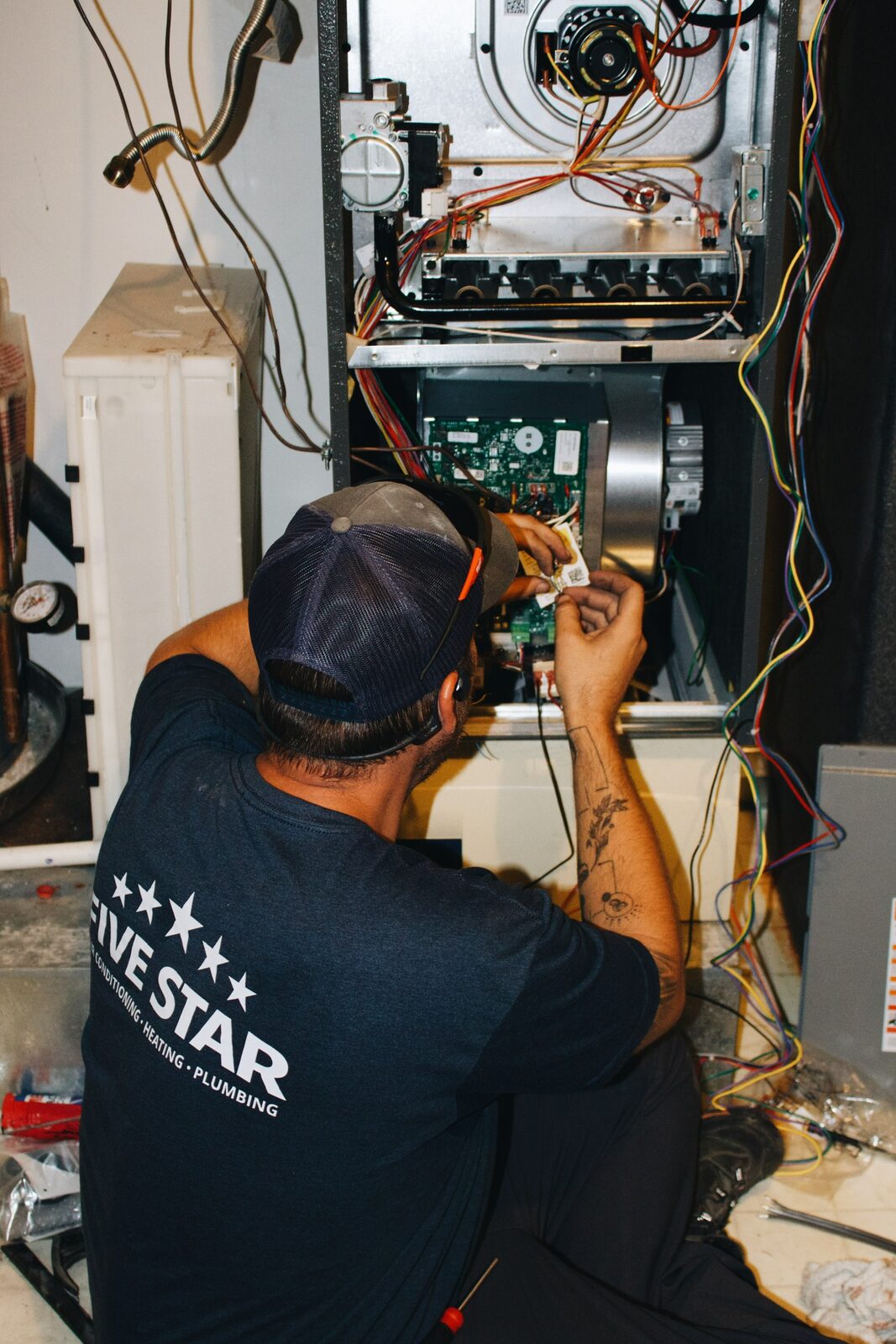
Every fall, once the nights in St. George start dipping toward freezing, we hear the same question on service calls: should I replace this old furnace with another furnace, or switch to a heat pump?
The honest answer depends on your house, and in Southern Utah it also depends on where your house is. A heat pump that's a great fit in Washington or Santa Clara can be the wrong call in Cedar City. Here's how to think it through.
We install and service both, and our techs are paid hourly, not on commission. Nobody at Five Star earns more if you pick one over the other.
The short version
St. George, Washington, Santa Clara, Ivins and Hurricane: winters are mild. Days usually warm into the 50s, and cold nights are short. That's exactly the weather heat pumps handle most efficiently, so for many homes in the lower valley a heat pump is the strongest option, especially when the AC is due for replacement too.
Cedar City and higher elevations: Cedar City sits around 5,800 feet, roughly 3,000 feet above St. George, and gets real snow and long freezes. A gas furnace, a dual-fuel system, or a cold-climate heat pump usually makes more sense up there.
Either way, remember that a heat pump also replaces your air conditioner. The real comparison is usually "heat pump vs. furnace plus an AC."
How a heat pump heats
A gas furnace makes heat by burning fuel. A heat pump moves heat: in winter it pulls warmth from the outdoor air and brings it inside, the same way your AC moves heat out in summer. Moving heat takes far less energy than making it.
The colder it gets outside, the harder a heat pump works. In the St. George area that rarely matters; on a cold night the backup heat runs for a few hours and the system goes back to normal. In Cedar City it matters a lot more, which is why newer cold-climate heat pumps (such as Mitsubishi's Hyper-Heat line) or a dual-fuel setup are worth a look there.
Where a gas furnace still wins
- Your AC is young and only the furnace failed. Replacing just the furnace is usually the lowest upfront cost.
- You live up the mountain. In Cedar City's winters, a furnace's steady heat is hard to beat.
- You like hot air from the vents. A furnace pushes noticeably warmer air than a heat pump does.
- Your furnace is healthy. The cheapest system is the one you already own. Keep it tuned up and keep using it.
What actually decides your monthly cost
- Your utility rates. What you pay per kilowatt-hour and per therm decides whether electric or gas heat is cheaper to run.
- Efficiency ratings. Heat pumps are rated by HSPF2 (heating) and SEER2 (cooling); furnaces by AFUE. Higher numbers cost more upfront and less every month.
- Your ductwork. Leaky or undersized ducts waste money with either system. We check them as part of any quote.
- Correct sizing. Oversized systems short-cycle and wear out early. We size every install with a Manual J load calculation, not a guess based on your old unit.
Dual-fuel: the both-and option
A dual-fuel system pairs a heat pump with a gas furnace. The heat pump handles cooling and most of the heating; the furnace takes over on the coldest nights. It costs more to install than either system alone, but it's a strong fit for Hurricane, La Verkin and Cedar City homes that already have gas and want heat pump efficiency without giving up furnace heat.
When it's time to replace both
Southern Utah summers are hard on air conditioners. If your AC and furnace are both getting old, replacing them together with a single heat pump (or a dual-fuel system) is often the cleanest answer. Not sure whether your AC is worth fixing? See our honest repair-vs-replace guide.
Questions to ask anyone who quotes you
- Did you do a load calculation, or are you matching the size of my old unit?
- What are the HSPF2, SEER2 or AFUE ratings of what you're quoting, in writing?
- Does this system make sense at my elevation?
- Is this a flat price, or can it change once the work starts?
- What's the warranty on parts and labor, and is it written down?
- Are your techs paid on commission?
How we quote it at Five Star
Owner Justin DeMille has spent 25 years in the trade, and the way we quote reflects it. A tech checks what you have, sizes your home, and gives you written, flat-rate quotes for each option that makes sense: repair, furnace, heat pump or dual-fuel. What you sign for is what you pay, and GoodLeap financing is available if you want to spread out the cost.
System working and you just want it ready for winter? Start with our $19 furnace tune-up. Already acting up? See furnace repair or heat pump service. We serve St. George, Washington, Hurricane, Cedar City and the rest of Southern Utah.
Common questions
Do heat pumps work in St. George winters?
Yes. St. George winters are mild, and that is where heat pumps are most efficient. On the colder nights, the system's backup heat covers the gap.
Is a heat pump a good idea in Cedar City?
It can be, but Cedar City sits around 5,800 feet and gets real snow and long freezes. A gas furnace, a dual-fuel system, or a cold-climate heat pump is usually the better fit there. We'll size it for your home.
Is a heat pump cheaper to run than a gas furnace?
It depends on your electric and gas rates, the efficiency rating of each system, and your ductwork. We run the comparison for your house and put it in writing.
How do I get a quote?
Call 435-817-8181. A tech sizes your home with a load calculation and gives you written flat-rate quotes for each option, side by side.
Want both options priced side by side?
We'll size your home, then put a heat pump quote and a furnace quote in writing next to each other. No pressure either way.
Call 435-817-8181